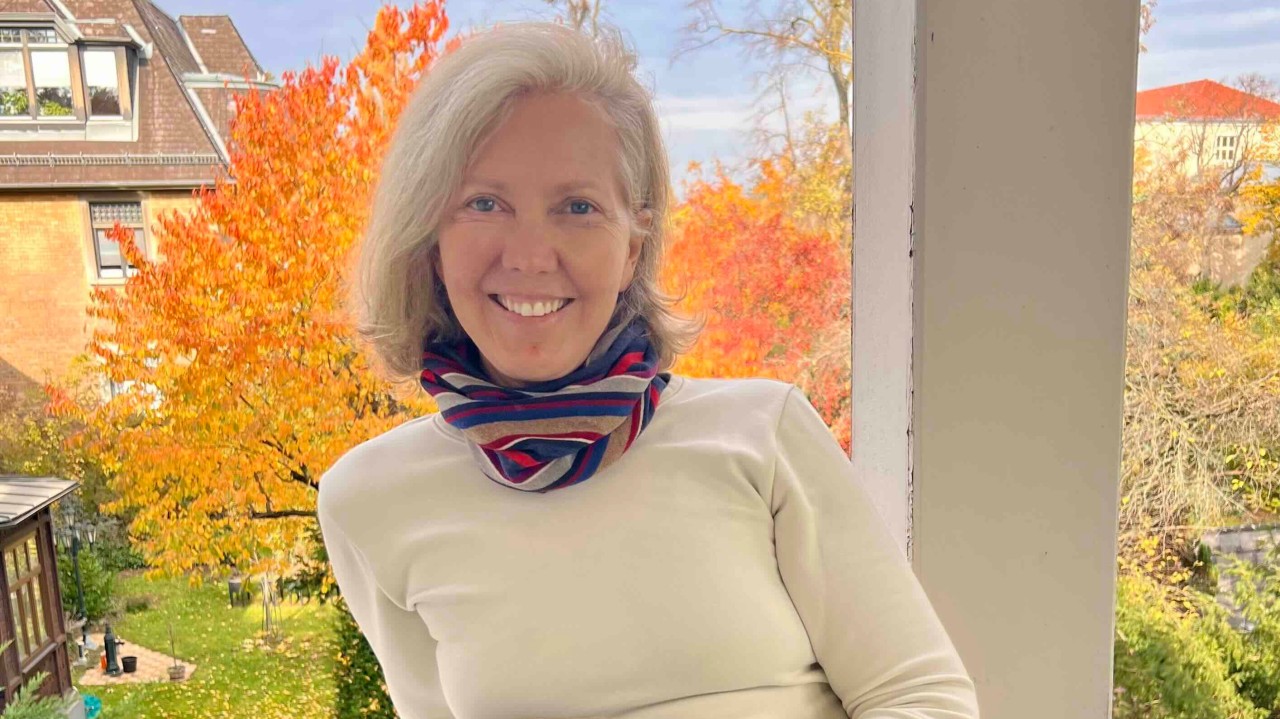
Today’s edition is special. Next Tuesday, 18 November I’ll be the featured guest on Lou Hamilton BRAVE NEW GIRL ‘s Podcast Brave New Girls – Well Beings, Well Planet.
Lou is an artist, author, filmmaker, and quiet revolutionary whose show spotlights women “moving mountains for the wellbeing of people and the planet.” Being invited into that lineage was deeply humbling — and a lot of fun.
We’ll be talking about my new book, Embody: The Power of Presence in an Age of Distraction, and the unlikely breadcrumbs that led me here: childhood, a decade of deep shamanic teachings, cancer, and the moment it all began after a simple LASIK operation.
This newsletter is the deeper dive — more serious, more scientific, but with a touch of humor, because if embodiment can’t make you laugh at your own inner circus… what are we even doing?
The journey from The Inner Travel Guide to Embody: a decade of revising the truth
Ten years ago I published a small book: The Inner Travel Guide. It was dedicated to a spiritual teacher who cracked my world open — Lorraine, a musician-jeweler-mystic who was at the forefront of the exploration of consciousness. It covered what I learned from the 15 years I spent working two months with her every year, watching her quietly, simply, shift consciousness, change lives and heal wounds with surgical compassion.
Shortly after it came out, Lorraine sat me down and — very kindly — told me I had misunderstood core aspects of her teaching. You know that feeling when your stomach drops through your shoes? Yes. That one.
I withdrew a revised edition. Then life demanded its own revision: I was diagnosed with cancer. Illness left me staring down everything I’d been avoiding. It also gave me time to understand what Lorraine had actually been pointing to.
A decade later — wiser, softer, and more precise — Embody arrived. It contains the corrected teachings, the expanded framework, and the practices I’ve honed across 20 years of deep work.
If the first book was a snapshot, Embody is the whole landscape.
A podcast conversation that feels like coming home
Lou asked questions I don’t often answer publicly:
• What childhood clues pointed me toward this work?
• What made me stop, reassess, and choose presence over performance?
• Why is presence the birthplace of creativity and innovation?
We answered them all. Some seriously. Some laughing. Because being human is both.
The unexpected awakening: LASIK and the vanishing self
The hinge of my own story is strangely medical: after LASIK surgery, the part of me that worried compulsively — the “responsible inner project manager” — simply… dropped away. What remained was a clear witness. A quiet spaciousness. No drama. No fanfare.
It terrified me and liberated me in equal measure.
That state didn’t last (humans are humans), but it showed me what presence feels like when unfiltered by habit. I knew, there and then, that I wasn’t living the life I was meant to be. I knew I had to make some radical changes, so I began on a completely different path than the one I had taken which led me to present news for the BBC.
This path led me inside myself: a deep dive to heal myself through somatic practice, tantric therapy, breathwork, shamanic journeys, and the study of consciousness.
Which brings us to the heart of this newsletter — and my book.
Presence is not a concept. It’s a biology.
We tend to talk about presence as if it’s a poetic ideal — something monks do while the rest of us check our phones. But presence has a biological signature. When you learn to inhabit your body, you change your physiology, cognition, and perception.
Here’s the science in human language:
1. Stress physiology
Modern life keeps us in a low-grade “guarded state.” Constant notifications, the pressure to respond instantly, the endless scroll — this creates elevated sympathetic activation. Your nervous system gets stuck on “high alert,” even if your face looks calm.
Presence practices activate the opposite: the parasympathetic system (the one responsible for recovery, healing, and calm). This isn’t spiritual fluff; it’s measurable physiology.
2. Attention and creativity
Every ping of your phone causes micro-switching in your brain. Micro-switches cost glucose and oxygen — your executive function literally drains. Creativity suffers. Decision quality plummets.
Sustained, embodied attention restores the depth-structures of the brain needed for insight. This is why ideas appear after a walk, not during a multitasking marathon.
3. Interoception: your inner GPS
Interoception is the ability to sense internal signals — heartbeat, breath, tension, warmth. People with strong interoception regulate emotions better, make clearer decisions, and recover faster from stress.
Lorraine’s teaching helped me find the place within me—in the pelvic floor— which is where the felt self, or our 2nd brain lives. Embodiment understands that by not just touching upon, but living from this place, everything in your life shifts. This isn’t a to-do list, it’s a change in your way of being.
4. Neuroplasticity
Every time you bring attention back to the body — especially to the pelvic floor (also called the hara, the lower dantian, or if you are from Kansas like me, home) — you’re training your nervous system. These small repetitions build new networks. Over time you become calmer, clearer, more grounded.
This is why presence is not a one-time epiphany. It’s a slow, elegant rewiring.
The lower abdomen: 4,000 years of humans agreeing on something
Nearly every tradition places the “center of real knowing” in the lower belly:
· Japanese martial arts call it hara
· Chinese traditions call it lower dantian
· Yogic systems refer to the kanda
· Nutritionists, scientists and researchers are calling it the “gut”
· Neuroscientists now call it the enteric nervous system
It’s not magical. It’s biological. When you breathe into and feel this area, the body organizes. Movement becomes coherent. Fear quiets. Insight opens.
This is why #embodiment is the doorway — not an accessory to the mind.
What Embody offers: a practical upgrade to the human operating system
Each chapter of Embody ends with small, grounded, repeatable practices. Not heroic practices. Not weekend retreats. Not 90-day programs that require you to rearrange your life.
Simple, consistent actions that build presence the way a musician builds muscle memory.
Human beings don’t need more information.
We need integration.
The practices help you: • peel away internal judgments • release outdated values • reconnect to your internal authority • calm the nervous system • rekindle creativity • and return to the unmistakable “you-ness” at the center
Presence changes you — and everyone you touch.
Humor, humility, and the freedom to be wonderfully human
The deeper I go into embodiment, the more I realize this:
You cannot do it “wrong.” You can only do it.
Presence is about returning home This brings you — again and again — to the moment you’re actually in. It asks for honesty, and it also allows for laughter. There will be days when your nervous system is a trampoline and your mind is a committee meeting. That’s okay.
The point is not perfection. It’s liberation. It’s joy. It’s remembering the spark inside you — the one that is only yours.
And yes, the science supports presence. But joy is the proof.
A serious takeaway with a playful side to it
You can upgrade your inner operating system. You can reclaim your creativity. You can calm your biology. You can reconnect to the unique spark that is yours alone. And you can do it without taking yourself too seriously along the way.
That is what it means to be happily human.
Join me with Lou Hamilton
Listen to our conversation with Lou Hamilton on Brave New Girls – Well Beings, Well Planet next Tuesday, 18 November: Here’s the link:
And if you want to read Embody: The Power of Presence in an Age of Distraction you can find the link here: <<https://tinyurl.com/4kv2avb8>>
There’s so much to learn about how knowing your body intelligence can help you in times of uncertainty. I can’t wait to share more.
Much love, Andrena